Sunday, May 31, 2009

Classroom Management....Closing the Day

My Remembering Hand
This is a little technique that really works when you need to give information in sequential steps, reviewing a list of things to remember to take home or for the child to tell parents.
For many children, the development of their auditory sequential memory can be anywhere between two to seven instructions. This ability will be significantly challenged when the child is placed in a noisy classroom. Combining both instructions with a hand movement/sequence may assist in anchoring the instruction neurologically through movement and touch.
  1. Try to give each instruction clearly and simply.
  2. The class echoes your words and mirrors any hand movement. (Even if this as simple as touching the first finger with the first instruction, second finger second instruction. )
  3. Continue through the sequence.
  4. Review the instructions in reverse order using same words and actions.
  5. Try the review out of order, still using same words and actions.
  6. Suggest to the children that now they can use their remembering hand in the same method at home in order to remember the message. (It does work!)

This would be my favourite way of reviewing a day with a class. We all laugh when I tell them that when Mum & Dad ask what was the best thing you did doing the day, they are not allowed to say LUNCH! It is usually quite interesting to see how much you really did do in the school day and to review the activities in time sequence. This is a very valuable tool for the student to develop in later years....one of reflection and review. Once the students have refreshed their memory of the day I often ask them to give me "a high five" as they file out the door and tell me their personal best thing for the day. The responses make for excellent reflection and evaluation for me as the teacher. The children love it too, as everyone gets to have a say!

Blessings for the journey,

Live,laugh and learn,

Carmel

Thursday, May 28, 2009

General Classroom Management

A STICKY SITUATION!
The teacher's lunch room is a great place to have a laugh about some of the everyday things that can drive you crazy. That is just what happened today. A number of early years teachers were bemoaning the way small children handle glue. The dramatization of the mess that can be made was hilarious. When it all quietened down I simply stated in my silliest voice,
"One, two three, four.....in the corner NO more!"
Everyone had another good laugh. When asked to explain, I felt a little foolish at the simplicity of the strategy. If glue pots are required I ask the whole class to chant after me,
"One, two three, four..... in the corner NO more!"
By this I mean that the student is instructed to only apply glue to the four corners of the sheet before sticking it into their book. I have found over the years this conserves glue, is time efficient, increases drying time and allows the child to continue working on the sheet as the centre of the sheet is not wet with glue. Classes that know my style will often say this without any prompting when they are gluing. Everyone listened and then we all talked about something far more interesting.
Here's the funny twist. This afternoon I had four of the teachers especially tell me how successful the strategy was and how much they loved it. My pleasure, treasure! If we are not here to share and support each other what are we doing?
Blessings for the journey....
Live,laugh and learn!
Carmel

Tuesday, May 26, 2009

Classroom Literacy Activities

SPICE IT UP!
Authors call them a "hook" and advertisers call them an "attention getter". Whatever the label, the introduction to a new session/lesson is where you win or loose the audience! I can assure you of a productive lesson if you have engaged all learners (and their learning styles) through a creative introduction. The variety of strategies do not need to be elaborate at all. Just a little investment of thought power can bring good dividends for both the learner and the facilitator.
Here is a strategy that I have enjoyed using in recent days.
VOTE WITH YOUR FEET:
This strategy allows total class involvement both in movement and engagement of thinking skills. It challenges everyone to have an opinion ,or at least, a reason why. The application is very broad.
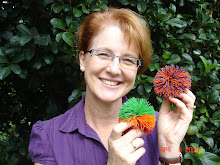
Basic Concept: All children stand. What does it mean to vote? Importance? Discuss. Explain that today we are going to be voting with your feet, after I make a general statement. Should you strongly agree with the statement, move to this side of the room, not sure, to the centre of the room and strongly disagree to the opposite side of the room. The wonderful part comes when you listen to the reasoning behind the child's vote. Use the Koosh ball and watch the discussion heat up!
This concept also works well with lower grades in the application of true/false statements. This week I used this strategy to heighten interest in a rather dull history lesson and associated workbook. Instead of an opinion, the children had to vote with their feet on which of the two outcomes they thought was realistic. As we moved through the text, I recorded key words and visual symbols that recounted the chapter. I was very impressed with the way the class then completed the written work of the chapter. The class feedback was most positive. Even I had fun thinking on my feet! Anything that allows the children to be true active learners is a winner for me!
Blessings for the journey.
Live, laugh and learn!
Carmel

Tuesday, April 14, 2009

Behaviour Management ...Random Rules for Lower Primary


Less Is More!

This is a great saying and one that the very nature of a teacher is challenged by. If you have enjoyed the last couple of posts about my use of "Random Rules" as part of my behaviour management beliefs then you will better understand this post.

With Early Years children the focus of three key behaviours proves to be enough. These would be my chosen three.

* ONE PERSON SPEAKING AT A TIME

* KIND WORDS, MANNER WORDS!

* TRYING MY BEST.

As a general rule I do not spend too much time describing how this technique works. Simply illustrating the symbols on the board and stating that I will be looking for people who are following this rule is enough . When the first child gets to record their name on the board under the rule they were doing, this is enough for the class to get the message! I also find if the class teacher already has a rewards chart in place, the names recorded can easily be transferred at the finish of a session without the disruption to the lesson time.

The little ones love being able to record their name on the board. Just allowing them to leave the classroom first at lunch time or be first to choose books from home corner can be reward enough for their good behaviour during the lesson. I would just stress that it is more beneficial to have shorter sessions and more reward points so that more child are able to feel the success of recognition.

If you feel this is all becoming too tiresome, try swapping to peer monitoring. Two children are asked to monitor their peers for a particular behaviour. You may like to give these two special people something distinguishing to hold to show they are doing a special role....maybe a soft toy or I use my Koosh balls. At the end of a short set time you ask who this person was. The child observer and the chosen child swap places and the system continues. This self monitoring technique gives power to the children and allows me to focus on my direct teaching. I always state first that if I don't agree with the decision the game stops. I also double reward if the child chooses most wisely.

Class teachers have so many wonderful ways to reward and encourage appropriate behaviours. Great results are achieved with the relationship they are able to form with the child and the class as a group. They also have the benefit of the classroom space and resources. As a relief teacher, we have to be able to implement techniques that take little resourcing, are simple and effective and lastly are clearly understood by the children.

I would love to hear about other ideas that work to make the supply teacher's day a happy and productive one.

Live, laugh and learn!

Carmel

Behaviour Management.... Random Rules (Part 2)

RANDOM RULES.....RULE!

Here is the second set of three symbols that complete....
THE SIX RANDOM RULES.

4. Raise my hand to ask a question.

5. Six feet flat on the floor!

6. Loving Choices.

Now for a quick explanation of each.. ....

I have found it necessary to reward this first behaviour particularly when you are in a new classroom situation. Raising your hand is the best way to manage the class discussions in an orderly way. When you know the class and a relationship has been established, ground rules can change to suit your teaching style. I often explain to an upper primary group that even in staff meetings, adults will raise their hands in order to indicate that they would like to make a verbal contribution to the discussion. It is the chair person's role to make sure that every one's ideas are heard and valued.

This symbol always brings a chuckle. Older children get the six feet concept straight away. (That is six in a circle under the chair drawing by the way.) Younger children may require a visual count of the four feet of the chair and two feet of the student making six feet flat on the floor. This rule may be selfish on my behalf as I can't count the number of times I have had a chair come down on my toe or clipped a chair leg as I moved past. (Work Place Health and Safety is my excuse!) I tend to circulate constantly around the students in whatever learning environment I am presented with. I believe this teaching style is called "a river" however, if you prefer a "mountain" style perhaps this rule will not be as necessary. Proximity to the student who requires attention is another practical behaviour management technique without being too obvious.

Last but not least is the much broader symbol of loving choices. I teach in schools with a Christian ethos and therefore, this language, and the behaviour it implies, is readily understood by the students. You could easily change loving to good choices. I think all children understand these choices come form the heart!

My six rules are my base set. I do not always use all of them. I change depending on the needs of the class. There are some days that I have not introduced the rules at the beginning of the school day and find I need to define ground rules after the first break. This works well too. The visual symbols on the board are a reminder of the expectations.

Sometimes, I like to ask the class what their special class/ school rules are so we can all enjoy a happy day. This is an interesting insight into the social functioning of the class as a group. Nearly always I can record my symbols as the class recounts their class rules. The class can then see these symbols as their own.

The other thing I like to do is highlight a rule that I will be especially rewarding during a certain time frame. For example: During group research work, I will be listening for kind words and watching for people trying their best. Other times I will secretly ask a couple of children to watch for two other children they saw making loving choices during a session. Children placing value on their peer's behaviour is a very powerful teaching tool.

There are even some occasions when a child with particularly high needs has really benefited from observing his class mates with a specific intention...... to learn more about acceptable behaviour! I don't make this a punishment, rather a task. Based on the random rule symbols and whatever behaviours I would like the child to focus on, I draw up a simple tally chart with the symbol on one side and a division to place tally marks for each time they observe this specific behaviour in the working classroom. You may want to get more specific......an eye diagram for keeping an eye on the speaker, or glue bottle when sharing the glue or hearing the words"Excuse me!" Whatever you choose don't make it too involved, have a time limit and keep it as a task not a punishment. The child will learn more than you will ever know!

I would ask the child what did they enjoy learning from this task. Their response may surprise you. I record this as a summary statement for this learning experience. I usually keep this to share with the class notes at the conclusion of the day. Often the student will be quite proud of their observations and would like to keep it themselves.

Behaviour management is both complex and interesting, especially to the substitute teacher. There is never a day when I don't learn something new about child behaviour. Remember you are dealing with children who are in different developmental stages...not mini adults!

Love to hear your feedback. Thanks for taking the time to read this blog.

Blessings for the journey.....

Live,laugh and learn!

Carmel


Behaviour Management ....Middle to Upper Primary Students

THE RANDOM RULES......RULE!

PART ONE


Rules, rules, rules! Rules are an essential element to the smooth function of any community. Every school and class group will always have a underlying set of rules but will you, as the supply teacher, be aware of the specific rules and the common language of each individual group's rules?

Most often the answer will be no.

Certainly when you work in one school community often, you do become familiar with school rules. Perhaps you will be lucky enough to be part of that school's in-services or staff meetings. Your on-going professional growth is your responsibility. Principals will always be happy to include you if you show the professional interest by asking.

More often than not, you may be in a situation where your specific school knowledge is not as strong as you would like. To be honest, you have so much new information to process every day; you must be able to respond quickly. This is another reason that this type of teaching is not for the faint hearted!

After some time and personal reflection, I have developed a set of six rules that I like to call my Six Random Rules. (The reason will become apparent for the use of the word random!) Here are the first three......


  1. ONE PERSON SPEAKING, EVERYONE LISTENING.
  2. KIND WORDS & MANNER WORDS.
  3. TRYING MY BEST.

The use of the symbol rule is visual, simple and clear. I have found the complete set ( next three in the following blog) to fit into any school community rules. At the same time, I feel very competent and professional in any situation, as the symbols and their uses are familiar to me.....

  • At the beginning of a school day, I outline my expectations for the day with my six random rules as drawn visual symbols on the board.
  • I explain to the class that these are the behaviours I will reward. When I see or hear a student following the rule I will randomly reward that student. You never know when you will be chosen.....hence random! Children today have a good sense of what random means. They are usually intrigued and therefore, quite engaged with the idea of a random rule!
  • When I choose to reward a child for doing the right behaviour, I ask them to record their name on the board under the rule they were following...... which is a reward in itself.
  • I reward all the children who have their names on the board at the conclusion of each session before the break.
  • Names are erased at the end of each session and all class members have an equal chance to be rewarded during the next session. (Over the years I have found this strategy to be a positive way to encourage all students to never give up trying. Each session in the day presents as a brand new opportunity for success.)
  • Students usually want to make the right choices. This teaching strategy makes it perfectly clear what it is you are looking for. The visual cues are a reminder all day. If the principal happens to pop in to see how you are going, what better way to let him/her know by explaining the strategy and at the same time affirming the students whose names are on the board!
  • The other very positive side to this strategy is that I rarely acknowledge negative or attention seeking behaviour. If a child is speaking when another child is speaking to the class group, I simply acknowledge a student who is demonstrating good listening behaviour. I might even go as far as to affirm why I knew that child was listening eg. I really liked the way you were looking right at the speaker when they were speaking. Watch the other children all adjust their behaviour as well after the explicit tip for good listening skills.

I trust this might be a additional strategy you might choose to use. I am away from home at the moment, however, I will try to add the part 2 as soon as I can get to a computer! Meanwhile, love to hear any strategies you have found really supportive to behaviour management in any area of the primary school.

Live, laugh and learn!

Blessings for the journey......

Carmel


Be Prepared!


The Supply Teacher's Tool Box!

Just like a trade's person, teachers are never to know what tools we may need on any given day!
As a Supply teacher, we have to be prepared and carry these tools with us every day. The more organized you are, the more you can streamline these resources so you are not physically carrying an unnecessary load. I have over given this a lot of thought over the years. Organization in my home environment makes for a smooth start to the day in so far as quickly packing "the tools" I may need. I have come to consider the tools based on these catergories.....
  1. Must Haves!
  • Hat
  • Sports Shoes
  • Umbrella
  • Water Bottle
  • Teacher's Badge
  • Cush Balls

2. Great to Have.

  • My teacher year level resource file.
  • Magnetic clock face.
  • Digital Timer
  • Whistle
  • Pencil Case etc
  • CDs ...music, songs, reflection or dance!

3. Optional Extras

  • Dice
  • Pick A Stick
  • Calculator
  • Magic Crystals
  • Magnetic pegs
  • Deck of Cards
  • Picture cards
  • Alphabet cards
  • 1-10 Cards
  • 1-25 tiles
  • Puppet
  • Selected Year level resources.

For the purpose of this blog, I thought I would just focus on one thing in my pencil case that is mandatory. I have six of these brightly coloured laminated cards. Look closely...can you work out what they may be?


If you are thinking this doesn't look like fun, you are correct.

It is a list of the TOP 100 most frequently misspelt words, organized into five lists of twenty. It is an old fashioned but effective behaviour management technique you may require when you have given the appropriate explanation and warning. I don't have call to use it often. Normally just telling the students about the TOP 100 AWARD (as I like to fondly call it) is enough. When necessary I attach it to the whiteboard as a visual reminder that I mean business!

If students are required to complete the TOP 100, I would always get them to sign and date under the statement that tells the class teacher why this work was assigned. I have found that sometimes it is necessary that "the leader" gets the full list and the "support partner in crime" may be given three lists instead of five! Often the class agrees with this as fair treatment.

When a class is undertaking an activity that requires quiet environment and a student chooses to push the boundaries, I don't hesitate. The card is immediately produced...no warnings. Class members can be very grateful that you mean business, not just all words. You need to make that professional judgement.

I also have a version for the younger children. I call it NUMBERS 1-200. The child simply writes out his numbers 1-200 or 1-100 ....whatever you set. Again I would keep the work as a record with a statement of what happened. Funny enough the attention seeking child usually just wants to be busy and may well be sick of listening to class discussion. It gives them a productive task with a learning outcome. Often they forget it was a punishment.

I have had a little chap get so wonderfully engaged with this activity in Year2, third year of school, that he published a book with the numbers written to 2000, in lots of 100. I made a friend for life and what a fantastic exploration of our number system. He was so proud of his mathematical thinking, it became quite consuming for him. The class teacher was so surprised and pleased with his reaction too!

As with any behaviour issues , you always need to ask yourself why this behaviour is occurring. There is an old saying with much truth.... when you point the finger of blame at someone; there is always three coming back at you! Most children want to please. What could you be doing to be more effective in this classroom. A difficult question for the supply teacher given you are only there for the day but one that is worthy of thought.

Blessings for the journey....

Live,laugh and learn!

Carmel