Showing posts with label Behaviour Management. Show all posts

Thursday, May 24, 2012

Clear Expectations for Great Expectations!

Who doesn't like knowing exactly what is expected of them?

As a teaching professional I like to have a clear idea of what is expected of me as well especially as the Australian Curriculum continues to be rolled out for us all to comprehend and implement.

The same can be said of our students?


Clear expectations of the behaviour and clear expectations of the learning are truly a marriage made in heaven. When you are doing a relief teaching day or week it is certainly no different.

The simple way to outline the learning is in the
WHAT? ... What we will be learning about.
HOW? ......How we will go about that learning.
WHY? .......Why this learning is important.

 Simply have the headings of LEARNING EXPECTATIONS  and BEHAVIOUR EXPECTATIONS on the board. If you are using this regularly you may like to laminate and attach some magnet strips for ease of use in each classroom. I list the question words and discuss the answers, adding the key content words as visual reminders of the learning expectation.

Under the behaviour expectations I list my focus rule/s in a symbol form/s, again as a visual reminder. It is then I start the lesson and affirm the learners as the expectations are met. I have always found when the students understand exactly what is expected of them the behaviour management issues are totally minimal. If issues do arise it is only a matter of clarifying what part of the task do they not understand and then redirect with positive affirmation. It is also so much easier to offer accurate feedback on the students work which assists you as the educator to make more informed choices about the teaching and also build genuine relationships based on respect.

Have a go and let me know how it works for you.


Live, laugh and learn,
Carmel

Monday, November 9, 2009

Out and About with the Class. (Part 1)

Children today are constantly on the move from one space to another in a school environment. There are endless opportunities in a day where the class needs to move as a group in order to get to a specialist lesson, (such as….Music, Drama, Japanese, Physical Education, Art) whole school assemblies, the church, library visits, or even the next door classroom.

Moving a group of students quietly and efficiently can sometimes be more challenging than it looks. The real truth can come down to management style of the permanent class teacher. Some classes have a well established routine that is best not to interfere with. Classes like this are proud to show you how they can self manage these situations. Leadership roles are usually displayed and the children know exactly what is expected of them. It is easy to find only positives things to express to the class teacher at the conclusion of the working day.

On the other hand, there are classes are so full of boundless energy and enthusiasm for life that it hard to get them to move as a group, let alone in two lines! Moving the class as a group is the one time you can really feel venerable to observations of any onlookers. Hence, I would offer these starting suggestions and strongly advise you to continually learn from your experiences in this area of management.

· ESTABLISH THE GROUND RULES: Quickly review what management structure is already in place. Affirm or outline the expectations of what will take place. Always highlight the positive behaviours that will be noticed or rewarded.

· FRONT AND BACK LEADERS: Whether upper, middle, or lower school, well managed or not, used to lining up in one, two or no lines, children always love being in charge! This strategy means you can allow four children to have “their time to shine.” I am always careful to ask the two front leaders move off when the class is ready but to stop and wait at a certain spot, like “Stop at the bottom of the library stairs.” This allows the group to stay together. When I am happy the class is settled and calm I would suggest the next waiting spot for the leaders. This way you also maintain some control of the movement. The Back Leaders are asked to walk so they have no-one behind them. In this way, you as the teacher can confidently move between the front and back, knowing all other children will be between these two sets of leaders.

· SECRET SIGN: Before leaving the classroom, establish a secret sign that communicates the need for attention of the whole group while you are out and about. A hand in the air is the golden oldie. The attentive children follow your lead and somehow those who are paying as much attention suddenly realize they are the only ones still chatting. Everyone else has their hand in the air!

Trust these thoughts may have a positive influence on your day.
To conclude here's a thought from an old African proverb....
"Don't look where you fell, but where you slipped!"
Live,laugh and learn,
Blessings for the journey...
Carmel

Tuesday, April 14, 2009

Behaviour Management ...Random Rules for Lower Primary


Less Is More!

This is a great saying and one that the very nature of a teacher is challenged by. If you have enjoyed the last couple of posts about my use of "Random Rules" as part of my behaviour management beliefs then you will better understand this post.

With Early Years children the focus of three key behaviours proves to be enough. These would be my chosen three.

* ONE PERSON SPEAKING AT A TIME

* KIND WORDS, MANNER WORDS!

* TRYING MY BEST.

As a general rule I do not spend too much time describing how this technique works. Simply illustrating the symbols on the board and stating that I will be looking for people who are following this rule is enough . When the first child gets to record their name on the board under the rule they were doing, this is enough for the class to get the message! I also find if the class teacher already has a rewards chart in place, the names recorded can easily be transferred at the finish of a session without the disruption to the lesson time.

The little ones love being able to record their name on the board. Just allowing them to leave the classroom first at lunch time or be first to choose books from home corner can be reward enough for their good behaviour during the lesson. I would just stress that it is more beneficial to have shorter sessions and more reward points so that more child are able to feel the success of recognition.

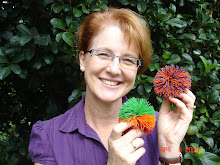
If you feel this is all becoming too tiresome, try swapping to peer monitoring. Two children are asked to monitor their peers for a particular behaviour. You may like to give these two special people something distinguishing to hold to show they are doing a special role....maybe a soft toy or I use my Koosh balls. At the end of a short set time you ask who this person was. The child observer and the chosen child swap places and the system continues. This self monitoring technique gives power to the children and allows me to focus on my direct teaching. I always state first that if I don't agree with the decision the game stops. I also double reward if the child chooses most wisely.

Class teachers have so many wonderful ways to reward and encourage appropriate behaviours. Great results are achieved with the relationship they are able to form with the child and the class as a group. They also have the benefit of the classroom space and resources. As a relief teacher, we have to be able to implement techniques that take little resourcing, are simple and effective and lastly are clearly understood by the children.

I would love to hear about other ideas that work to make the supply teacher's day a happy and productive one.

Live, laugh and learn!

Carmel

Behaviour Management.... Random Rules (Part 2)

RANDOM RULES.....RULE!

Here is the second set of three symbols that complete....
THE SIX RANDOM RULES.

4. Raise my hand to ask a question.

5. Six feet flat on the floor!

6. Loving Choices.

Now for a quick explanation of each.. ....

I have found it necessary to reward this first behaviour particularly when you are in a new classroom situation. Raising your hand is the best way to manage the class discussions in an orderly way. When you know the class and a relationship has been established, ground rules can change to suit your teaching style. I often explain to an upper primary group that even in staff meetings, adults will raise their hands in order to indicate that they would like to make a verbal contribution to the discussion. It is the chair person's role to make sure that every one's ideas are heard and valued.

This symbol always brings a chuckle. Older children get the six feet concept straight away. (That is six in a circle under the chair drawing by the way.) Younger children may require a visual count of the four feet of the chair and two feet of the student making six feet flat on the floor. This rule may be selfish on my behalf as I can't count the number of times I have had a chair come down on my toe or clipped a chair leg as I moved past. (Work Place Health and Safety is my excuse!) I tend to circulate constantly around the students in whatever learning environment I am presented with. I believe this teaching style is called "a river" however, if you prefer a "mountain" style perhaps this rule will not be as necessary. Proximity to the student who requires attention is another practical behaviour management technique without being too obvious.

Last but not least is the much broader symbol of loving choices. I teach in schools with a Christian ethos and therefore, this language, and the behaviour it implies, is readily understood by the students. You could easily change loving to good choices. I think all children understand these choices come form the heart!

My six rules are my base set. I do not always use all of them. I change depending on the needs of the class. There are some days that I have not introduced the rules at the beginning of the school day and find I need to define ground rules after the first break. This works well too. The visual symbols on the board are a reminder of the expectations.

Sometimes, I like to ask the class what their special class/ school rules are so we can all enjoy a happy day. This is an interesting insight into the social functioning of the class as a group. Nearly always I can record my symbols as the class recounts their class rules. The class can then see these symbols as their own.

The other thing I like to do is highlight a rule that I will be especially rewarding during a certain time frame. For example: During group research work, I will be listening for kind words and watching for people trying their best. Other times I will secretly ask a couple of children to watch for two other children they saw making loving choices during a session. Children placing value on their peer's behaviour is a very powerful teaching tool.

There are even some occasions when a child with particularly high needs has really benefited from observing his class mates with a specific intention...... to learn more about acceptable behaviour! I don't make this a punishment, rather a task. Based on the random rule symbols and whatever behaviours I would like the child to focus on, I draw up a simple tally chart with the symbol on one side and a division to place tally marks for each time they observe this specific behaviour in the working classroom. You may want to get more specific......an eye diagram for keeping an eye on the speaker, or glue bottle when sharing the glue or hearing the words"Excuse me!" Whatever you choose don't make it too involved, have a time limit and keep it as a task not a punishment. The child will learn more than you will ever know!

I would ask the child what did they enjoy learning from this task. Their response may surprise you. I record this as a summary statement for this learning experience. I usually keep this to share with the class notes at the conclusion of the day. Often the student will be quite proud of their observations and would like to keep it themselves.

Behaviour management is both complex and interesting, especially to the substitute teacher. There is never a day when I don't learn something new about child behaviour. Remember you are dealing with children who are in different developmental stages...not mini adults!

Love to hear your feedback. Thanks for taking the time to read this blog.

Blessings for the journey.....

Live,laugh and learn!

Carmel


Behaviour Management...Early Years

A Little Puppet Magic.....
Allow me to introduce my little friend Crystal....yes she is a darling little hand puppet. I have found she is of most value when I visit a Prep classroom. ( This is the first year of official school attendance.) Here in an Early Years learning environment the children adore all the things that Crystal can do!

Crystal is wonderful at.....

  • spotting the best listener during class discussions.
  • choosing children to be leaders, special helpers etc.
  • playing games, like "Where is?"
  • Tapping children on the shoulder (in patterns, songs, number, instruction ) during transition times from one activity to another. ( So helpful in managing the large group as they move to small groups.)
  • Rewarding a child with a special time to cuddle.
  • Sitting up high in the classroom to watch everyone working happily and then report back to me!
  • Going back into my back-pack when the noise level scares her or if she just knows she needs a rest and a little time to read quietly!
  • Super at choosing a book to share, or choosing a child to help with that task.
  • Giving me good suggestions for lovely learning games and songs to sing.


All in all she is a very capable mouse and friend to have with me in these younger classes. I find having Crystal as a prop is helpful in quickly building a relationship with the younger students, allowing the children to focus on the cute puppet and not the fact that their teacher is not present today and gives a third party element to the decisions that need to made quickly and may not be exactly the way the class teacher manages the group. Crystal can also be used to demonstrate what not to do in a very appealing way. She is so good at saying sorry! She says that making mistakes are all a part of learning and that is a good thing so long as we try hard to not do that again!


Children love any soft toy. If there is any negative aspect to this strategy, I would recommend you don't allow your chosen puppet to just handled in general free time. I have found the fact that because Crystal returns to my back-pack throughout the day when she is not in use very positive. When she is awake and interacting, the time is special and attention getting. I am sure the children love the fact that she is cute, soft and cheeky. While she tries to do the loving choices, she also makes mistakes and has learned how to say sorry!


I am not suggesting you become a children's entertainment specialist with a complete puppet show. This is far from my comfort zone I can assure you. The benefits of a puppet as teaching tool ,whether you are male of female, are amazing and so are the genuine laughs and enjoyment on the children's faces. You just have to source a puppet that suits you! Happy days!

Live, learn and laugh!
Carmel

PS This puppet was sourced from Crescendo Music website resources at http://www.crescendo.com.au
The resouces are really worth a look, not just for music teachers.

Sunday, March 22, 2009

It is not what you say, it's how you say it!

Have I grabbed your attention with the ten dollar note?
Well children, no matter what age, love anything to do with money too!
You'll be amazed when I share this little secret with you....

The other day I was on first lunch duty with the middle and upper primary classes. As the other teacher approached at the end of the duty, he commented about the general lack of litter. I laughed and said "It is not what you say but how you say it that counts!" I did not think anymore about it until the same teacher sat with me in the staffroom one lunch-time and complimented me on how neatly I had left his classroom after a rather messy art lesson. He insisted I tell him my trick!

There are no tricks. Firstly, I ask myself what is my desired outcome. Then I think of the most interesting and creative way I can engage the student in gaining this desired outcome! Picking up litter, whether in the classroom or in the playground, is not exactly what children will want to happily engage in, so this takes some lateral thinking!

My solution is to.......

  1. Gain the students' attention.
  2. Tell them are welcome to leave the room, go to lunch, or play area, but there is one condition. You have to pay to leave. (First time you will have a stunned audience!)
  3. No worries. It is only $50. (More stunned silence!) That is right, each piece of litter, no matter how large or small ,is worth $10. I love tips and I hold up the bin!
  4. You would be surprised how quickly the children run around counting in tens and mostly I have lots of extra tips. It's fun. It's fast. It's not boring!

In the classroom, I don't always say the same thing. If we have just finished a Maths lesson with the focus on prime numbers, I might ask for any prime number of pieces of litter under ten. Or I may ask for 2/3 of 9, or perhaps a random number fact and if you make an error it costs some more to leave the room. It gives me a chance to stand at the door and speak to each child as they deposit their contribution. All designed to build relationships, consolidate learning and make the day fun!

Blessings for the journey....

Live,laugh and learn!

Carmel